
Key takeaways
- The independent core is therefore not deserted; its customer base is changing: less regular business travel, more seasonal leisure and more domestic customers who trade down.
- The dividing line therefore does not run only between categories, where the gradient remains clear (in the second quarter of 2026: 4–5-star +4.2% in guest nights, 3-star +3.7%, 1–2-star −2.1%, unrated −12.0%; see note 78): it also runs through the 3-star segment, a segment in recovery, and we did not find any public statistic that says whether chain or independent hotels capture the benefit.
- Demand exists; what it requires of the midscale independent is a repositioning of the offer that the squeeze makes hard to finance.
The fifth pressure is the most structural, because it conditions all the others: without demand, neither land, nor costs, nor financing, nor brand affiliation really matters. Yet demand is precisely where the independent core is worst placed. The problem is not a lack of demand; it is that demand is shifting toward the upper end of the market.
3.5.1 — The domestic market: a long-standing ceiling and a marked social divide
The independent core's first demand base is French residents themselves. That base has been capped for forty years and is deeply segmented.
The vacation departure rate has been remarkably stable over the long run: outside crisis periods, it hovers around 60%, which means that about 40% of French people do not take a single vacation in a given year.¹¹⁸ The Crédoc series shows it stable from 1985 to 2011. There is therefore no "natural" reservoir of domestic growth: the home market is mature, not expandable.
Above all, this average masks a marked social divide. In fall 2025, 81% of people with a monthly income above €2,550 went on vacation, against only 49% of those earning less than €1,190.¹¹⁹ Socio-professional category widens the gap further: 78% of senior managers and professionals take a vacation, against 54% of blue-collar workers.¹²⁰ The director of Crédoc (a French consumer research center) sums up the trade-off: when money is tight, leisure is cut first.
The implication for the independent core is direct. Midscale and economy hotels historically lived off these middle-income domestic customers: the middle class, whose leisure budget is precisely the one most subject to trade-offs under constraint. In our reading, the lowest-income households are not so much turning away from the independent core as already absent from it: for the most part, they were not traveling, or were camping. If the middle class were also trading down on this line item, midscale and economy hotels should be the first exposed. So far, 3-star guest nights do not show it; 1–2-star and unrated hotels show it more. Conversely, affluent customers who keep traveling several times a year head to upscale hotels or abroad, not to the rural 2-star hotel.
One qualification is needed. Summer 2025 saw a rebound, with 63% of French people going on vacation, a level not seen since summer 2022, and a higher average budget. The rebound did not benefit everyone: the summer budget per household reached about €2,477 among senior managers and professionals, against about €1,512 among working-class households, whose budget had not been this low in three years.¹²¹ More people travel, but the spending gap among those who travel remains considerable, which, once again, pushes value toward the top end.
An apparent contradiction, already outlined in Section 3.2, remains to be resolved: if France posted one of the lowest inflation rates in Europe at the end of 2025, how can the leisure budget be squeezed? Because the two measures describe different things. Inflation measures the pace of price increases. The budget available for vacations depends on what remains once committed expenditures (notably housing, energy and insurance) are paid. These rose from about 13% of disposable income in the early 1960s to 28% in 2022, and weigh far more heavily on low- and middle-income budgets.¹²² Despite slower inflation, purchasing power per consumption unit fell by 0.7% in 2025,¹²³ and the adjustment shifts to discretionary spending, in which vacations are a first-order variable. Low inflation and sluggish domestic hotel demand are therefore not contradictory: the first concerns the pace of prices, the second a structural trade-off that disinflation alone cannot reverse. As the next subsection details, that trade-off could divert part of the middle class toward campsites, nearby foreign destinations or peer-to-peer rentals; we did not identify any public data that measures this shift, and 3-star guest nights do not show it to date. The rebound in inflation in 2026, driven by energy (Section 3.2), weighs precisely on these committed expenditures.
3.5.2 — Leaking demand: trade-offs, a safety-driven retreat and Mediterranean competition
The second dynamic: part of demand, both French and international, is leaving the country or shifting within it toward other segments. "Leaking demand" in fact covers three distinct movements that must be separated.
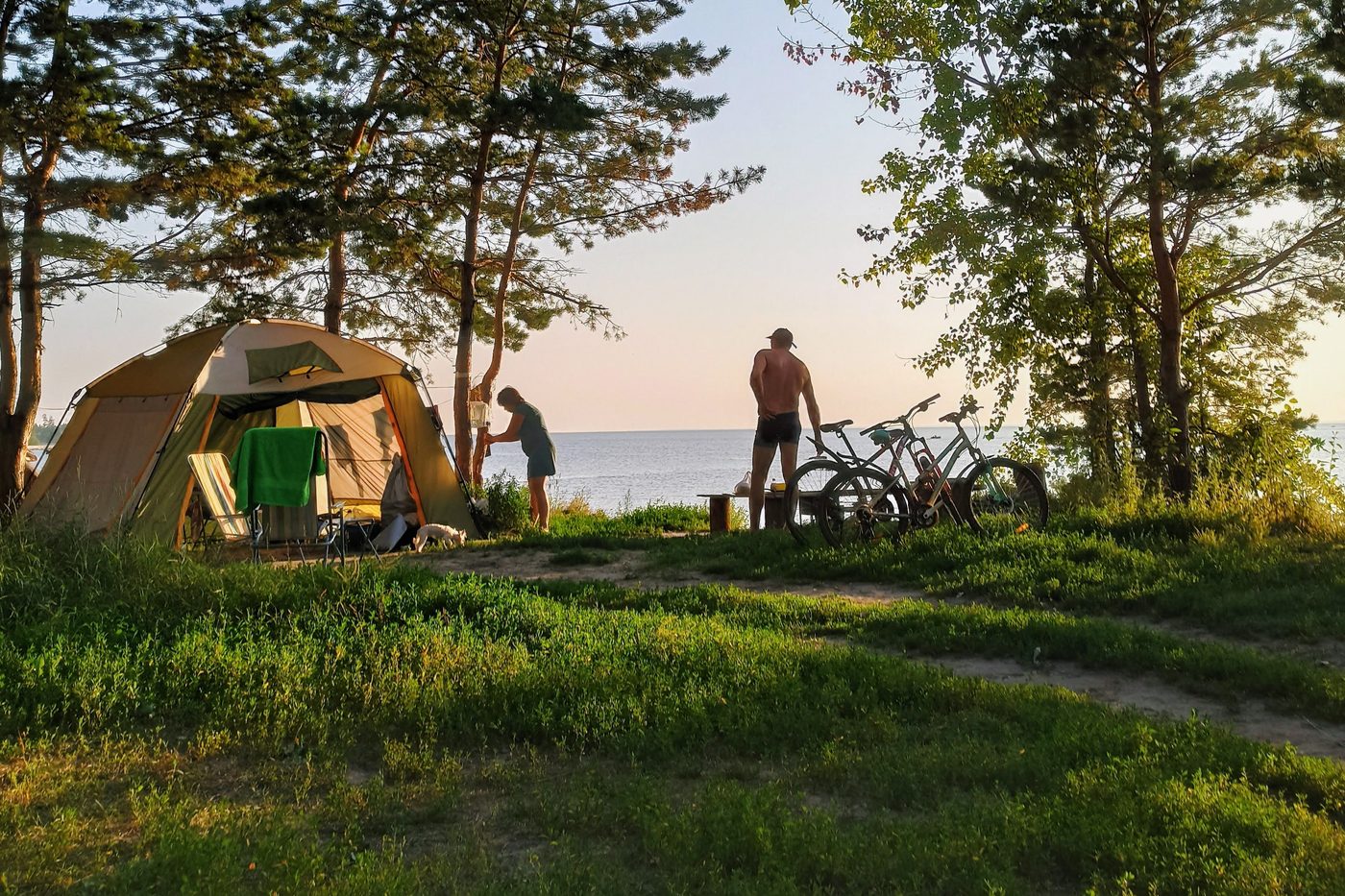
First movement — domestic budget trade-offs. Under constraint, travelers do not always give up the trip, but they trade down: shorter stays, later bookings, cheaper accommodation, targeted spending. The 2025 season illustrated this: visitor numbers held up, but bookings came later. Intention surveys give the order of magnitude. Among French people who plan to go away for at least a week, a narrow majority (51%) say they intend to cut their vacation budget. These respondents cite equally the reduction of trip scope (length, distance or frequency, 61%) and limiting on-site spending (60%), ahead of looking for cheaper accommodation or travel (47%).¹²⁴ Length and frequency of stays thus become adjustment variables in their own right: part of the budget constraint is absorbed there. As we did not find a comparable, recent public series on average length of stay by country, we refrain from quantifying the gap with Spain or Italy; but the direction of the domestic movement is documented, and it works against the hotel guest night, whose value depends directly on the number of nights sold. This trade-off may shift part of demand from hotels to furnished tourist rentals and campsites; public statistics do not show, to date, a shift from midscale to economy. In summer, camping has become the country's leading form of collective tourist accommodation: 124.9 million guest nights in summer 2025, against 90.4 million for hotels.¹²⁵ Upscale camping can thus compete with midscale hotels for customers seeking comfort on a controlled budget; we did not identify any data that measures this shift.
Second movement — a safety-driven retreat to mainland France, which could benefit the hotel stock. 2026 intentions show a clear return toward France: of French travelers who have already chosen their destination, 51% plan to stay exclusively in France, up 15 percentage points. The driver is largely geopolitical and anxiety-related: tensions in the Middle East, the surge in oil prices and international travel alerts are delaying travel decisions and pushing travelers away from long-haul destinations toward closer trips perceived as safer. Notably, the United States drops out of the top five planned destinations, overtaken by Canada.¹²⁶ In principle, this retreat is an opportunity for French hotels, provided the stock is fit to capture this demand, which the underinvestment described by the squeeze may compromise; we did not, however, find any public statistic that measures the condition of the stock.
Hotels still have to capture demand that has other accommodation options (short-term rentals, staying with family and friends, camping). This is one more reason why the reshaping of demand, far from being neutral, works against the independent core.
Third movement — Mediterranean competition, which captures the shift. France is not the only beneficiary of the retreat: nearby Southern Europe benefits too. Italy, Spain, Greece and Portugal benefit from these shifts thanks to their proximity and perceived stability. The top four foreign destinations of French travelers have in fact been unchanged for three years: Italy, Spain, Greece, Portugal.¹²⁷ The Mediterranean bloc is therefore both the competitor capturing outbound French demand and the rival that monetizes its own flows better (Section 2). France is not losing the volume battle; it is sharing it, in a long-stay leisure segment where its neighbors are structurally better placed.
Furnished tourist rentals compete with hotels for part of this demand. Lawmakers have stepped in on this segment, with the aim of returning housing to the long-term rental or sales market. France's November 19, 2024 law strengthening local regulation of furnished tourist rentals (the "Le Meur law") is the most substantial regulatory response in a decade. It cuts the flat-rate tax allowance for rated furnished tourist rentals from 71% to 50%, and that for unrated ones to 30%, everywhere and regardless of whether the area is a tight housing market. It strengthens mayors' powers to impose quotas or lower the cap on rental nights from 120 to 90 days, and sets energy-performance requirements specific to furnished tourist rentals.¹²⁸ These measures could indirectly rebalance competition in favor of hotels. Their impact, however, is gradual, not immediate: applying quotas remains at the discretion of municipalities, the existing stock benefits from compliance grace periods, and the large platforms have the resources to challenge implementation. Decree alone will not rebalance travelers' choice between hotels and rentals.
3.5.3 — The geography of demand: a reshaping, not a desertion
These movements have a geographic translation that must be read with caution, because its pattern has changed within a few quarters.
In the third quarter of 2025, hotel demand grew far faster in dense urban areas (+7.3%) than in rural municipalities (+0.8%). The first quarter of 2026 reversed the picture: rural areas grew 2.8%, intermediate urban areas jumped 10.6%, while dense urban areas declined 1.2%.¹²⁹ This quarterly volatility rules out concluding that demand is "leaking" geographically in one direction or the other. In 2026 travel intentions, the regional ranking holds but softens across the board: Provence-Alpes-Côte d'Azur (in the lead), Occitanie and Brittany each lose six percentage points.¹³⁰
The structural signal lies elsewhere, and it is unambiguous: it is the purpose of travel that is being reshaped, not its geography. Business travel declined uninterruptedly from the end of the health crisis through the first quarter of 2026. The second quarter of 2026 marks the first increase since the pandemic, +6.0%, which INSEE (the national statistics office) flags as such (see note 78). One quarter does not make a turnaround, and the level remains low. In the second quarter of 2026, business guest nights account for 28.5% of all guest nights in hotels and other collective tourist accommodation. The two other measures already cited (national hotel guest nights, 3.1.2, and Île-de-France, 2.3) point in the same direction: the segment has not recovered its weight. What is established is not the segment's return; it is the end of its fall. This decline hits intermediate urban areas hardest (business guest nights there fell 18.3% in the third quarter of 2025, against 14.1% in dense urban areas and only 7.7% in rural areas). That is where the historical core of economy chains and independent 3-star hotels was calibrated for weekday corporate travelers. If these areas are not emptying, it is because leisure customers (nature tourism, short-distance trips, weekends) are offsetting the disappearance of business trips.
The implication for the independent core is more demanding than a simple desertion: demand exists in its geography, but its nature has changed. The rural or peri-urban hotel built around the Tuesday-night traveling sales rep must pivot to the Saturday-night couple. This pivot comes at a cost: leisure fills weekends and the high season, rarely weekdays. This repositioning of product, services and sales and marketing (renovation of rooms and public areas, upgraded food and beverage and services, distribution and brand tools) requires precisely the investment the squeeze denies it. Demand is not leaving the hotel; it is waiting for it somewhere other than where its business model placed it.
This pivot remains justified where business demand is not coming back (dense urban areas were still down 5.9% in the first quarter of 2026), and much less so where it is returning. Nor is it just a matter of renovation. Moving from business to leisure changes the job as much as the décor: welcoming a weekend couple or family follows different codes from serving a rushed sales rep—longer stays, expectations of experience and advice, sensitivity to a sense of place. It also requires building what the business-travel model made secondary: partnerships with the local leisure ecosystem (wineries, heritage sites, outdoor activity providers, tourist offices), and integration into the local fabric that turns the hotel into a gateway to the area rather than a mere place to sleep. It is a network asset as much as a square-meter asset, and this relationship capital is precisely what the stand-alone operator, absorbed by day-to-day operations, has the least time to build.
This shift toward short-distance leisure is not a mere technical rebound: it rests on a deep societal demand. Public health research establishes that a minimum amount of time spent in nature (on the order of two hours a week) is associated with a measurable improvement in self-reported well-being.¹³¹ French public authorities have made it one strand of tourism policy, with the DGE (the Directorate General for Enterprise) developing a "slow tourism" offer for several years—digital detox, low-impact itinerant travel, local gastronomy and heritage.¹³² The figures are more ambiguous. In summer 2025, guest nights grew 2.8% in rural areas, against 3.7% nationally; in summer 2026, according to still-provisional data, they grew 3.2% in rural areas against 1.1% for the country as a whole, but mainly in campsites. INSEE's summer review does not isolate rural hotels; its quarterly series do, and they show weak and uneven growth in rural hotel guest nights: +0.8% in the third quarter of 2025, against +4.3% for all hotels; +2.8% in the first quarter of 2026; then flat in the second quarter, against +1.4%.¹³³ The desire to recharge outside cities is documented; nothing yet establishes that it benefits rural hotels. The distinction is decisive for the rest of this document: what makes rural areas attractive is not, to date, their hotel growth; it is, in our hypothesis, their lower entry price.
Summer 2026 gave a clear illustration of this reshaping. July, the hottest month ever recorded in France, shifted part of demand toward temperate coastlines: the English Channel coast gained 4.5 points of occupancy year on year. Conversely, Gironde, hit by a wildfire, lost ten points of occupancy in August (see note 77). For an owner, this is not just weather risk; it is a capital-allocation question: which areas will carry demand in ten years, and which will lose it.

3.5.4 — International demand: a real engine, but one that concentrates at the top end
Last but not least: international demand, which drives value, flows only partially into midscale; it concentrates on upscale hotels and major hubs.
First, the structural fact: while upscale is driven by international customers, domestic guest nights still account for two-thirds of demand in France. In other words, the independent core remains primarily dependent on domestic demand (capped and trading down), while international demand concentrates where it spends: in Palace-designated hotels, foreign travelers accounted for 83% of guest nights in 2025, as in 2024.¹³⁴
The breakdown by source market confirms the premium concentration. In Paris Île-de-France, among high-spending customers, the United States accounts for 12% of stays and 16% of spending, alongside China and the Gulf countries.¹³⁵ These distant, affluent markets create the value, and they stay primarily in upscale hotels: in 2025, non-residents account for two-thirds of 5-star guest nights and one-third of 3-star guest nights.¹³⁶
Finally, the geopolitical reshaping of this clientele illustrates upscale's dependence on long-haul markets. Russian demand, historically concentrated in a few destinations (Côte d'Azur, Courchevel, Paris) rather than spread nationwide, has collapsed since 2022: in summer 2022, Russian hotel guest nights were only 15% to 20% of their summer 2019 level, according to INSEE.¹³⁷ A private measure gives the order of magnitude in Courchevel's Palace hotels: Russian customers, who could account for up to 25% of foreign guest nights depending on the property, averaged only 12% in 2022, down from 2019.¹³⁸ According to regional estimates, which are not statistical measurements, the financial impact is reported to have been offset by the return of US and Gulf customers, supported by a strong dollar and sustained premium leisure demand. The premium segment absorbs this kind of shock by shifting to other markets; the independent core has far less access to them.
Forecasters expect these customers to keep absorbing moderate price increases: for Paris luxury and upscale, they forecast ADR growth of 1.9% in 2027, against 1.2% for London luxury.¹³⁹
3.5.5 — Synthesis: demand is there, but it is being reshaped, and the dividing line runs through the 3-star segment
The demand pressure does not tighten through an overall shortage: France remains the world's leading destination, international visitors are flocking in, and French people, on average, still travel as much as before. It tightens through a misallocation for the independent core:
Guest nights are rising at the top of the market and falling at the bottom
Change in guest nights by category, first and second quarters of 2026, %
| Category | Q1 2026 | Q2 2026 |
|---|---|---|
| 4–5-star | +5.9 | +4.2 |
| 3-star | +4.9 | +3.7 |
| 1–2-star | −1.4 | −2.1 |
| Unrated | −14.1 | −12.0 |
Source: INSEE, Informations rapides no. 120, May 21, 2026 (Q1) and no. 196, August 19, 2026 (Q2) · Dalmagne Performance
- its domestic base is capped and trades down to cheaper options or to not traveling;
- geographically, demand is not deserting rural and peri-urban areas; its nature is changing there, with leisure having replaced part of business demand in 2025. Yet this pivot requires a repositioning that the squeeze makes difficult for the independent core located there.
At this stage, what official figures allow us to state is limited: 3-star guest nights are growing, while unrated hotels are declining and 1–2-star hotels, flat in 2025, are declining slightly in 2026; business travel, after a long decline, has only been picking up since the second quarter of 2026 (+6.0%, then +7.6% in summer excluding campsites, provisional data), and its share of hotel guest nights remains about one-third below its 2019 level (30.0% in 2025 against 45.5% in 2019; 3.1.2); leisure has made up the volume. What these figures do not say (and what must be framed as open questions rather than conclusions) concerns the mechanics of this reshaping for the midscale independent.
Three hypotheses are consistent with the facts, although public statistics alone cannot prove them. First, a 4-star ADR drifting away from the caps set by corporate travel policies could push toward 3-star hotels the share of business travel subject to those caps and to corporate rate agreements. Second, the decline in 2-star supply could reflect, at least in part, an administrative reclassification to 3-star rather than a net disappearance of supply. Third, brand affiliation: loyalty programs and corporate contracts concentrate a substantial share of business demand on brands, which weighs on the midscale independent regardless of the overall health of the 3-star category. The aggregate picture is therefore reassuring for the star category, and more ambiguous for the independent within it. What official data show: demand is being reshaped. What they do not settle: who, within the 3-star segment, comes out ahead.
They do, however, allow us to break down the category's recovery. A little under one-third comes from supply: as of January 1, 2025, the 3-star segment had 1.1% more rooms than a year earlier, while 2-star and unrated hotels lost rooms, which is consistent with the second hypothesis without proving it. The rest comes from higher occupancy, driven by both resident and non-resident customers. Growth continues in 2026 (+4.9% then +3.7% in 3-star guest nights in the first two quarters), in a market where hotel demand across all categories is growing most strongly in intermediate urban areas (+10.6% then +9.2%), although INSEE does not cross-tabulate category and territory. The increase in the first quarter of 2026 preceded that of business travel, which was still declining.
On pricing, midscale regained volume in 2025 by giving up rate (−1.3%), then gained on both fronts in the first half of 2026 (+1.2 points of occupancy, +1.4% in ADR). The dividing line therefore does not run only between categories, where the gradient remains clear (in the second quarter of 2026: 4–5-star +4.2% in guest nights, 3-star +3.7%, 1–2-star −2.1%, unrated −12.0%; see note 78): it also runs through the 3-star segment, a segment in recovery, and we did not find any public statistic that says whether chain or independent hotels capture the benefit. This is the blind spot of the squeeze.¹⁴⁰
Notes and sources
- ¹¹⁸ Crédoc, vacation departure rate of French residents, long series: Sandra Hoibian, 2011 : embellie sur les vacances [2011: an upturn in vacations], study commissioned by the DGCIS, Crédoc, report no. 319, January 2015, chart 1 ("Conditions de vie et aspirations" surveys, January 1985 to June 2011). ↩
- ¹¹⁹ Observatoire des inégalités, "Quatre Français sur dix ne partent pas en vacances", June 30, 2026, based on Crédoc, "Conditions de vie et aspirations" survey, fall 2025. Crédoc data cited secondhand. ↩
- ¹²⁰ Ibid. ↩
- ¹²¹ Plurélya, "Vacances des Français : bilan 2025 et évolution sur 10 ans", undated page. Industry source: the origin of the data is not specified. ↩
- ¹²² INSEE, "Consommation et épargne des ménages", fact sheet 7.2, France, portrait social, "Insee Références" series, 2023 edition, November 23, 2023, chart 2 (share of committed expenditures in gross disposable income, series since 1960). ↩
- ¹²³ Janine Eguienta, Jean-Cyprien Héam and Pauline Meinzel, "Les comptes de la Nation en 2025", Insee Première no. 2105, INSEE, May 29, 2026. Provisional accounts, subject to revision. ↩
- ¹²⁴ Ifop for Alliance France Tourisme, Les vacances d'été des Français, study no. 122,053, online survey conducted March 17–20, 2026 among 1,002 people, April 28, 2026. Stated intentions, collected for the industry: they do not measure actual behavior. Base for the levers: people who are cutting their budget, i.e., 35% of the sample; multiple answers allowed; "scope" combines length (32%), distance (26%) and frequency (21%). ↩
- ¹²⁵ Gilles Valaison, "Saison touristique d'été 2025", Insee Focus no. 363, INSEE, September 26, 2025. ↩
- ¹²⁶ Ipsos bva for Europ Assistance, "Vacances d'été 2026 : les Français privilégient l'hexagone face aux crises mondiales et à l'inflation", 25th edition of Europ Assistance's Baromètre des vacances, April 28, 2026. Stated intentions, not observed departures. ↩
- ¹²⁷ Ibid. ↩
- ¹²⁸ Loi n° 2024-1039 du 19 novembre 2024 visant à renforcer les outils de régulation des meublés de tourisme à l'échelle locale ("Le Meur law"). The allowances concerned are those of the micro-BIC simplified tax regime. ↩
- ¹²⁹ INSEE, "Au troisième trimestre 2025, la fréquentation des hébergements collectifs touristiques augmente de 2,9 % sur un an", Informations rapides no. 286, November 20, 2025; INSEE, "Au premier trimestre 2026, la fréquentation des hébergements collectifs touristiques hors campings est en hausse de 1,0 % sur un an", Informations rapides no. 120, May 21, 2026. Provisional data. ↩
- ¹³⁰ Ipsos bva for Europ Assistance, "Vacances d'été 2026". ↩
- ¹³¹ Mathew P. White et al., "Spending at least 120 minutes a week in nature is associated with good health and wellbeing," Scientific Reports 9, article 7730, June 13, 2019. ↩
- ¹³² Direction générale des entreprises, "Le slow tourisme", October 1, 2024. ↩
- ¹³³ Gilles Valaison, "Saison touristique d'été 2025", Insee Focus no. 363, INSEE, September 26, 2025 (May-to-August season). The "excluding coast and mountains" category in the same publication, sometimes equated with rural areas, includes cities: it does not measure rural areas. Gilles Valaison, "Saison touristique d'été 2026", Insee Focus no. 387, INSEE, September 29, 2026 (July and August 2026 data provisional; rural growth driven mainly by campsites). Rural hotels: INSEE, Informations rapides no. 286 (note 129), no. 120 and no. 196 (note 2). ↩
- ¹³⁴ RYDGE Conseil, L'Industrie hôtelière française en 2026, 49th edition, 2026 (study historically published by KPMG), p. 69 (Palace panel, share of guest nights); RYDGE Conseil, L'Industrie hôtelière française, 48th edition, October 8, 2025 (year 2024). ↩
- ¹³⁵ Aurélian Catana, Mickaël Le Priol, Aurélien Neff and Emmanuel Rodier, "États-Unis, Chine et Émirats Arabes Unis : des clientèles touristiques à fort pouvoir d'achat pour Paris Île-de-France", Enjeux Île-de-France no. 266, CCI Paris Île-de-France (CROCIS) and Choose Paris Region, October 20, 2025. ↩
- ¹³⁶ INSEE, "Parc et fréquentation des hôtels. Données annuelles 2025", Chiffres-clés, July 23, 2026. Dalmagne Performance calculation: non-resident guest nights divided by total guest nights, 66.1% in 5-star and 35.3% in 3-star hotels. ↩
- ¹³⁷ CRT Provence-Alpes-Côte d'Azur; Choose Paris Region, 2022–2024 estimates; Alice Mainguené, Pierre Girard and Barbara Castellettifont, "Été 2022 : une fréquentation touristique au-dessus de son niveau d'avant-crise", Insee Focus no. 275, INSEE, October 11, 2022; In Extenso and MKG, 2024–2025 reviews. Regional estimates of the contraction in Russian flows are not statistical measurements and are not used here. The INSEE figure applies to each of the Russian, Japanese and Chinese customer groups. ↩
- ¹³⁸ KPMG, L'Industrie hôtelière française en 2023, 46th edition, October 2023, "Observatoire 2022 des Palaces", p. 89. Panel of more than 160 rooms in Courchevel; the same source documents for 2022 the weight of US and Middle Eastern customers in Paris, and of US customers on the Riviera. ↩
- ¹³⁹ CoStar (STR) and Tourism Economics, "Global Hotel Market Forecast Assumptions – Q3 2026," August 31, 2026. Publisher forecast, not a measurement. Perimeters differ: luxury and upper upscale combined in Paris ("Luxury & Upper Upscale"), luxury only in London. ↩
- ¹⁴⁰ INSEE, "Tourisme en 2024" and "Tourisme en 2025", France as a whole, table TOU T1 (hotel capacity as of January 1), July 11, 2024 and July 10, 2025: 3-star rooms 258,100 then 260,884; 2-star 112,373 then 108,797; unrated 84,691 then 81,507; INSEE, Informations rapides no. 120 and no. 196 (cited above), for customer segments and territories ("intermediate urban"); Alliance France Tourisme, Observatoire économique du tourisme no. 17, p. 10, and no. 23, p. 17 (MKG panel, midscale segment, which does not exactly match the 3-star category). Dalmagne Performance calculation: 1.1% more rooms as of January 1, 2025 (year on year) for 3.8% more guest nights in 2025, i.e., a little under one-third. ↩
Publication
Published on October 15, 2026 by Cédric Dallemagne, Founder & Managing Partner, Dalmagne Performance, and Guest Lecturer, Les Roches Global Hospitality Education. Data as of September 30, 2026.
With thanks to Taran Patel (Les Roches), Laurent Bonnet (Valther), Lloyd Smith (SteadiLev).